The Truth About Chemical Drain Cleaners
Plumbing Solutions of Idaho expert tips


Why Chemical Drain Cleaners Cause More Damage Than Good
When a drain slows or backs up, many homeowners reach for a chemical drain cleaner. The packaging promises fast results with minimal effort, making it feel like an easy fix. Unfortunately, those products often create bigger plumbing problems than the original clog.
At Plumbing Solutions of Idaho, we regularly repair drain systems damaged by chemical cleaners. While these products may seem convenient, they frequently cause long-term harm to pipes, fixtures, and plumbing systems—especially in Idaho homes.
Why Chemical Drain Cleaners Seem to Work at First
Chemical drain cleaners rely on corrosive reactions to break down clogs. Most formulas use highly acidic or caustic ingredients designed to dissolve hair, grease, and organic material.
In some cases, these chemicals partially clear the blockage. Water begins draining again, which creates the illusion of success. However, the underlying problem often remains. The clog may loosen but not fully disappear, allowing buildup to return quickly.
That temporary relief masks the real damage happening inside the pipes.
What Chemical Cleaners Do to Your Pipes
Chemical drain cleaners do not distinguish between clogs and plumbing materials. As they react, they generate heat and corrosion that attacks pipe surfaces.
Over time, this damage leads to:
- Thinning pipe walls
- Weakened joints and fittings
- Cracked or warped plastic pipes
- Accelerated corrosion in metal pipes
Older homes with aging plumbing face even greater risk. Repeated chemical exposure dramatically shortens pipe lifespan and increases the likelihood of leaks or failures.
Why Chemical Cleaners Make Some Clogs Worse
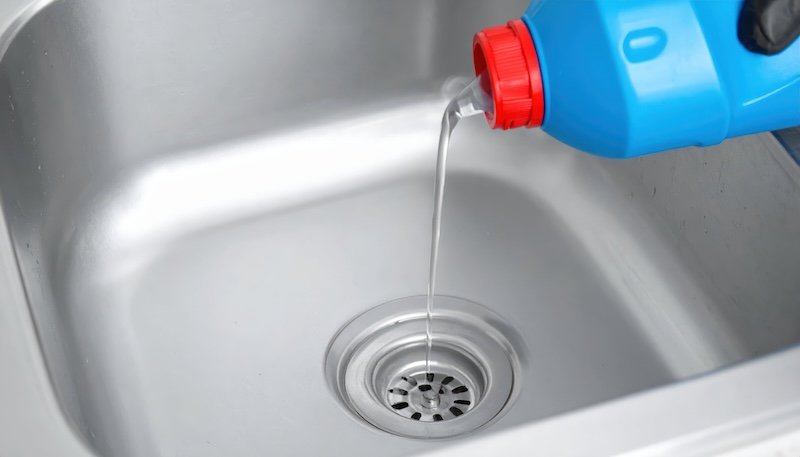
When chemical cleaners fail to fully dissolve a clog, residue often hardens inside the pipe. This residue creates rough surfaces that trap debris more easily, leading to repeat blockages.
Grease clogs present a common example. Chemicals may soften grease temporarily, but once the solution cools, grease re-solidifies farther down the line. This shifts the problem deeper into the plumbing system, making future repairs more difficult and costly.
Damage to Drains, Fixtures, and Seals
Chemical drain cleaners do not stop at pipes. They also damage:
- Sink and tub finishes
- Porcelain and enamel surfaces
- Rubber seals and gaskets
- Drain traps and connectors
Repeated use weakens these components, increasing the risk of leaks under sinks and inside walls. Many homeowners only discover the damage once water stains or structural issues appear.
Why Chemical Cleaners Fail in Serious Clogs
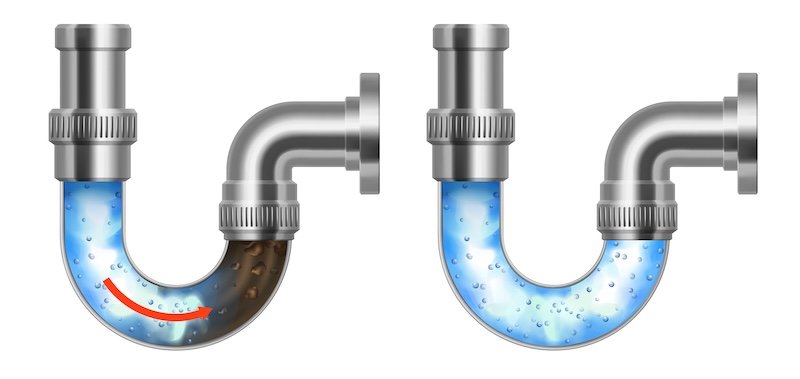
Chemical drain cleaners work best on minor, surface-level buildup. They struggle against common real-world plumbing issues such as:
- Tree root intrusion
- Collapsed or misaligned pipes
- Heavy grease buildup
- Foreign objects lodged in drains
When chemicals fail, they often remain sitting in the pipe. This creates a hazardous environment for anyone attempting mechanical clearing afterward—including homeowners and plumbers.
The Safety Risks Most People Overlook
Chemical drain cleaners pose safety risks beyond plumbing damage. Fumes irritate lungs and eyes. Splashing can cause severe skin burns. Mixing different products creates dangerous chemical reactions.
In homes with children or pets, these risks increase significantly. Improper storage or disposal adds another layer of danger.
Professional drain service avoids these hazards entirely.
Why Professional Drain Cleaning Works Better
Professional plumbers address clogs mechanically, not chemically. This approach removes blockages without damaging pipes.
Professional methods include:
- Drain snaking to break apart clogs
- Hydro jetting to clean pipe walls thoroughly
- Camera inspections to identify underlying issues
- Targeted repairs when structural problems exist
These solutions remove the cause of the clog rather than masking symptoms.
Long-Term Cost Comparison: Chemicals vs Professional Service
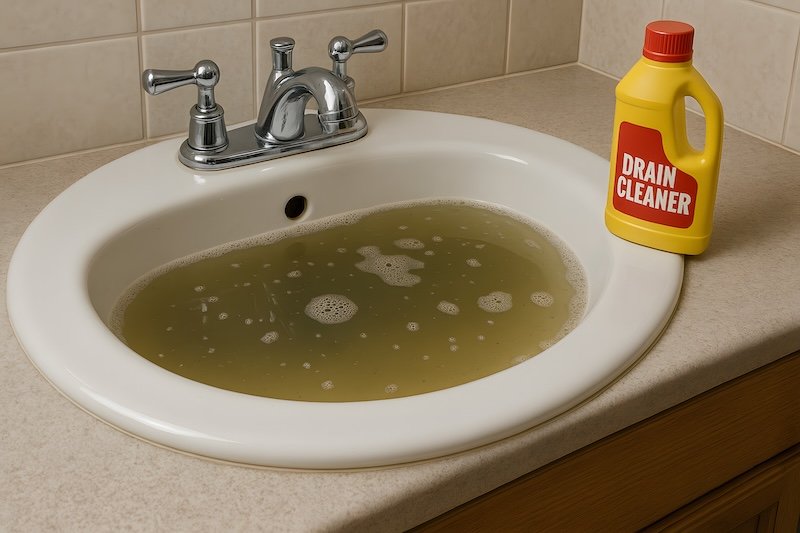
Chemical cleaners appear inexpensive at checkout. Over time, repeated use adds up—especially when damage occurs.
Pipe repairs, leak remediation, and water damage restoration cost far more than professional drain service. In many cases, homeowners spend significantly more fixing chemical damage than they would have spent addressing the original clog correctly.
Preventive maintenance and professional cleaning save money long term.
When a Slow Drain Signals a Bigger Problem
Slow drains often indicate developing issues inside the plumbing system. Grease buildup, mineral deposits, or pipe damage rarely resolve on their own.
Ignoring these signs or relying on chemicals delays proper diagnosis. Professional evaluation identifies problems early—before they escalate into backups, leaks, or pipe failure.
Why Calling a Professional Protects Your Plumbing System
Plumbing systems work as a whole. Treating one drain chemically can impact pipes throughout the house.
Professional plumbers assess system condition, recommend appropriate solutions, and perform repairs that protect long-term performance. That expertise prevents damage, reduces repeat problems, and keeps plumbing systems reliable.
A Better Way to Handle Drain Problem
Chemical drain cleaners promise convenience, but they rarely deliver lasting results. Instead, they compromise pipe integrity and create future repair needs.
If a drain slows, backs up, or smells unpleasant, professional service provides clarity and safe solutions. Addressing the issue correctly the first time protects your plumbing system and avoids unnecessary damage.
About Plumbing Solutions of Idaho in Meridian, Idaho
Plumbing Solutions of Idaho is your trusted local plumber in Meridian, Idaho, offering expert plumbing services to the Treasure Valley. Whether you need help fixing toilets, repairing leaks, or handling complex plumbing issues, our team of experienced plumbers provides fast, reliable, and affordable solutions. We specialize in residential and commercial plumbing services, ensuring plumbing systems operate at their best. As a top choice for plumbing services in Boise and surrounding communities, Plumbing Solutions of Idaho remains committed to exceptional service and customer satisfaction.
Serving Boise, Meridian, and the Surrounding Area
Our Service Area
 All Service Areas